GET UPDATES IN YOUR INBOX! Subscribe to our SPAM-free updates here:

GET UPDATES IN YOUR INBOX! Subscribe to our SPAM-free email here:

Delivered by FeedBurner

Wednesday, March 31, 2010

"Where New York Began" at the Transit Museum Annex, Grand Central

If you are in Grand Central any time between now and July 5 and you have a few minutes to spare, it's worth your while to check out the new exhibition at the Transit Museum's gallery. The show, titled "Where New York Began: Archaeology at the South Ferry Terminal," explores some of the 50,000 artifacts unearthed during the building of the new South Ferry subway station.

When an 18th-century portion of the old Battery wall* was unearthed in 2005, it made headlines around the city. Less talked about, however, was the trove of artifacts uncovered during the excavation, including fragments of building materials and lovely tile and ceramics, some of which date back to the Dutch Colonial era. While only a small portion of the finds are on view at Grand Central, the well-laid out exhibition takes viewers through all the different types of finds that archaeologists discovered at the site, including more recent relics, like a soda bottle and remnants of the original subway station.


* Portions of the wall itself are on view in Castle Clinton in Battery Park.


 * * *

Read more about Battery Park -- from the Dutch Colonial era to the present --
To get RSS feeds from this blog, point your reader to this link.
Or, to subscribe via email,
 follow this link.
Also, you can now
 follow us on Twitter.

Wednesday, March 24, 2010

Central Park Walking Tour + "Inside the Apple" Book Talk

On Sunday, March 28, at 4:00PM the Borders bookstore at Columbus Circle is sponsoring a walking tour and book signing with us where we'll be talking about the history, architecture, and art of Central Park. We'll be sharing stories from Inside the Apple, which is celebrating its first year in print this week.


We'll meet inside the store (which is on the second floor of the Time Warner Center) over at the special events section. From the store, we'll walk into the park and spend approximately 90 minutes looking at the history of the park, its development in the mid-19th century, and the role that Frederick Law Olmsted and Calvert Vaux's original master plan still plays today. The tour will conclude back at Borders for a question and answer session and book signing.


In order to make sure that tour starts on time, please try to be in Borders by 3:50PM. No reservations are necessary.


 * * *

To get RSS feeds from this blog, point your reader to this link.
Or, to subscribe via email,
 follow this link.
Also, you can now
 follow us on Twitter.

Tuesday, March 16, 2010

New York Stock Exchange Reaches an All-Time Low

Today, the number of shares traded daily at the New York Stock Exchange numbers in the billions. But 180 years ago today – on March 16, 1830 – only thirty-one shares changed hands in both the morning and afternoon sessions, an all-time low. A typical day in the 1830s saw well over 1,000 shares traded and by 1835 daily volume would reach 8,500 shares.

In 1830, the exchange was located in rented quarters at 40 Wall Street. Five years later that building – along with most of Wall Street – would be engulfed by the Great Fire of 1835, a huge conflagration that destroyed 600  buildings downtown.

After moving a couple of times in the 19th century, the exchange finally settled on Broad Street; its current home, designed by George B. Post, opened in 1903.

 * * *


Read more about the New York Stock Exchange
in
 Inside the Apple: A Streetwise History of New York City
.
To get RSS feeds from this blog, point your reader to this link.
Or, to subscribe via email,
 follow this link.
Also, you can now
 follow us on Twitter.


Friday, March 12, 2010

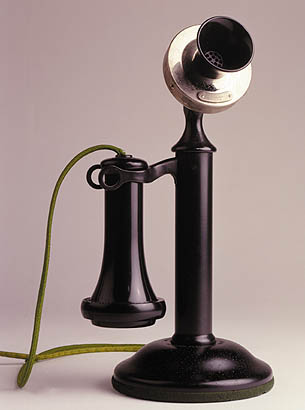
Area Code Blues


Norman Mailer called it "Probably the worst news to hit Brooklyn since the Dodgers moved to Los Angeles." No, he wasn't back from the dead to pronounce judgment on the new Nets arena -- he was talking about the 718 area code, which was introduced 25 years ago.

When area codes were first established in 1947, all of New York was given 212. Due to its large population, the city was assigned the area code that was considered easiest to dial on a rotary telephone. However, by the early 1980s, it was becoming clear to Public Service Commission that New York's continued growth would soon create the need for a new area code. (Not only was the population rising, fax machines were becoming affordable for the first time and the country's first 1G cell phone network had just been established.)

The commission decided to allow Manhattan and the Bronx to retain the 212 area code, assigning 718 to Queens, Brooklyn, and Staten Island. Public reaction was swift and furious. Businesses complained about the costs of reprinting stationery and letterhead; residents kvetched about being pushed further into the realm of the "outer boroughs." As Brooklyn College's president, Robert Hess, remarked to the New York Times: "It's a giant step backwards. For 80-odd years we've been striving to make New York a single city out of the five boroughs. To solve a problem in New York where there are not enough lines by essentially evicting the outer boroughs is really an affront."

Today, of course, 718 seems old fashioned. In 1992, the Bronx (and the Marble Hill section of Manhattan) joined the other boroughs by switching to 718; that was the same year that the 917 area code was added to Manhattan. (Fun fact: originally, 917 was used more for beepers and pagers than for cell phones.) Area codes 646 and 347 were added in 1999 to further lighten to load, but there still aren’t enough numbers -- area code 929 will be introduced in early 2011 to provide more service in the outer boroughs.

* * *


Read more about New York's role in the creation of the telephone
in
 Inside the Apple: A Streetwise History of New York City
.
To get RSS feeds from this blog, point your reader to this link.
Or, to subscribe via email,
 follow this link.
Also, you can now
 follow us on Twitter.

Thursday, March 4, 2010

Congress Meets for the First Time on Wall Street


On March 4, 1789 -- 221 years ago today -- the first United States Congress convened at the old Federal Hall on Wall Street.
Beginning in 1774, with the gathering of the First Continental Congress, there has been some sort of representative body governing the United States. What makes the Congress of March 4, 1789, important is that it was the first to convene after the ratification of the Constitution,* and thus marks the beginning of modern American governance. The first meeting of Congress had 21 senators (representing 11 states – New York only had one senator until July 1789) and 58 members of the House of Representatives.
As we discuss in Inside the Apple, choosing New York as the first (albeit temporary) capital of the fledgling country was not a universally supported move. However, Alexander Hamilton -- who would soon be appointed by George Washington as the nation's first Treasury Secretary and its de facto Prime Minister -- lobbied hard for New York to be the seat of government.

During the 16 months that Congress met in New York, they passed landmark legislation, none bigger than the Bill of Rights. But they also established the U.S. Census, provided laws to protect patents and copyrights, and promulgated the first regulations to allow naturalization of immigrants. One of the last laws Congress passed in New York created Washington, D.C., as a federal district and the new national capital. Since that city would be built from the ground up, the legislators had to find somewhere else to meet in the meantime. While Hamilton would have favored that they remain in New York, Secretary of State Thomas Jefferson successfully persuaded Congress to move the capital to Philadelphia in the interim.


The original Federal Hall, which was at corner of Wall and Nassau streets, no longer stands. In its place is the old Custom House (1842), now called Federal Hall National Memorial. If you are in the Financial District today, stop by; it is free and open to the public.


* In truth, only 11 states had ratified the Constitution: North Carolina
and Rhode Island would both do so during Congress's first session.
* * *


Read more about New York's role as America's capital
in
 Inside the Apple: A Streetwise History of New York City
.
To get RSS feeds from this blog, point your reader to this link.
Or, to subscribe via email,
 follow this link.Also, you can now follow us on Twitter.
Friday, February 26, 2010

The First World Trade Center Bombing

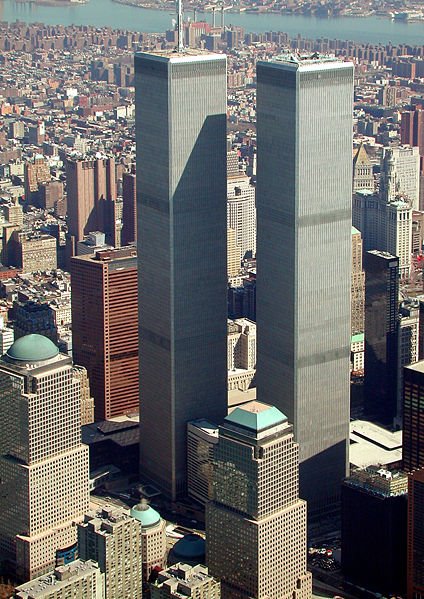
Today marks the 17th anniversary of the 1993 World Trade Center bombing that killed six people and injured over 1,000 more.

The plot and bombing were carried out by seven men: Mohammed Salameh, Ramzi Yousef, Mahmud Abouhalima, Nidal Ayyad, Abdul Rahman Yasin, Ahmad Ajaj, and Eyad Ismoil.

On the morning of February 26, 1993, Ismoil and Yousef drove a rented Ryder van into Manhattan from Jersey City. According to author Simon Reeve in
The New Jackals, their intended destination may have been the United Nations, but finding the buildings too well secured, they switched to plan "B" and targeted the Twin Towers instead.

The van exploded at 12:17 p.m., tearing a huge hole in the  concrete foundations of WTC 1 (the north tower) and destroying a portion of the garage. The tower immediately lost power and all workers were evacuated; most of the injuries came during the scramble to get people to safety.


Investigators found the frame of the van and were able to pull its VIN, thus linking it back to Mohammed Salameh, who had rented the van and then reported it stolen. When Salameh returned to the Ryder agency in Jersey City to get back his $400 deposit, the FBI arrested him. The mastermind of the attack, Ramzi Yousef, returned to Jersey City that afternoon and immediately flew out of the country to Pakistan. He was not apprehended until after his involvement in the bombing of Philippine Airlines flight 434 in December 1994, a trial run in the so-called "Bojinka" plot to explode dozens of airlines. Yousef's uncle, Khalid Sheikh Mohammed, would ultimately be the force behind the second attack on the World Trade Center on September 11, 2001.

Eventually, all the conspirators in the 1993 World Trade Center bombing were arrested and incarcerated except for Abdul Rahman Yasin, who was last seen in Iraq in 2003 and has not been seen or heard from since.

The six fatalities at the World Trade Center in 1993 were John DiGiovanni (age 45), Robert Kirkpatrick (61), Stephen Knapp (48), Bill Macko (47), Wilfredo Mercado (37), and Monica Smith (35), who was seven months pregnant at the time of her death. A memorial to them that once stood in the plaza at the World Trade Center was destroyed on 9/11; a new tribute to these victims will be included when the "Reflecting Absence" memorial opens -- supposedly by September 11th next year.

* * *


Read more about the construction of the World Trade Center
in
 Inside the Apple: A Streetwise History of New York City
.
To get RSS feeds from this blog, point your reader to this link.
Or, to subscribe via email,
 follow this link.Also, you can now follow us on Twitter.

Friday, February 19, 2010

Giving New York Back to the English

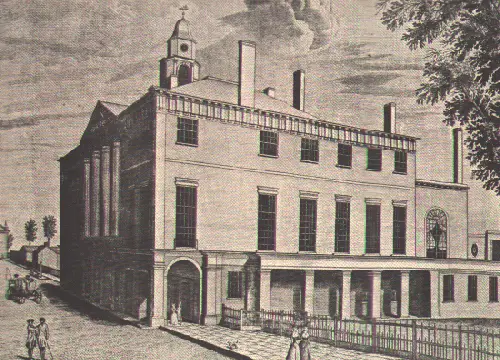
New York has an overabundance of birthdays. Last year, the city celebrated its 400th anniversary, using Henry Hudson's arrival in New York harbor in 1609 as the starting point of the city's history. And -- as we talk about in Inside the Apple -- the date on the city's official seal has changed multiple times, from 1686 (the year of the first official English charter -- see illustration at right) to 1664 (the year of the English takeover of New Amsterdam) to 1625 (the year that the Dutch colonists began permanent settlement on Manhattan).

But today, February 19, might be a good day to celebrate, too; on this day in 1674, King Charles II signed the Treaty of Westminster, which ended the Third Anglo-Dutch War. While the Dutch and the English had been fighting on and off since the 1650s, this conflict had one crucial difference: in August 1673 the Dutch had seized New York, installed a new Dutch governor named Anthony Colve, and renamed the city "New Orange." Thus, by signing the Treaty of Westminster, Charles II was confirming once and for all that New York was an English colony -- but it didn't have to end up that way.

The New Orange chapter in the city's history is largely ignored. The Dutch had held the city for less than seven months when the peace treaty was signed and while it took them another few months to hand the reins of power back to the English, New Orange lasted for less than a year. However, the seeds of rebellion that were planted during that year of renewed Dutch self-rule had a profound effect on the development of the city over the next century. The ongoing conflict between the Dutch citizens and the English government would make New York develop in a way completely different than any other American colony.

With the signing of the Treaty of Westminster, the English regained control of New York and would not lose it again until the American Revolution. In exchange for giving the island back, the Dutch retained control of Suriname, an important sugar producing colony for them. But it's not inconceivable that if the political winds had been blowing differently, the Dutch might have ceded Suriname to the English and insisted on keeping New Orange for themselves. Imagine how different life would be today in New Orange!


* * *


Read more about Dutch New Amsterdam and the English takeover
in
 Inside the Apple: A Streetwise History of New York City
.
To get RSS feeds from this blog, point your reader to this link.
Or, to subscribe via email, follow this link.
Also, you can now follow us on Twitter.
Thursday, February 11, 2010

Model Homes and a "Dream House" on Fifth Avenue

Yesterday, when our friends at Gothamist ran the above picture as part of their in-depth coverage of Snowpocalype 2010 (or is that Snowmageddon?), they asked us if we had any information on the cute house on the right side of the photo, which was located at Fifth Avenue and 48th Street.

At first, we thought it must be one of many "Dream Houses" built in 1948 to coincide with the release of the film Mr. Blandings Builds His Dream House. (More on that, below.) However, the facts didn't quite gel. The photo credit from LIFE magazine notes that it was taken in December 1947 -- months before the film and its related houses would have been built. Also, the New York Times mentions a two-story building with a sun deck and a game room above the garage, which is clearly not the home pictured in this photo.

So what was this house? Another New York Times article provided a clue, referring to the "Dream House" location as "Fifth Avenue's suburban corner...where country cottages are displayed for good causes." Was the "Dream House" not the first model home to grace that intersection?

It turns out it wasn't.

But first, a little bit about Mr. Blandings. In 1946, Eric Hodgins published the novel Mr. Blandings Builds His Dream House, which tells the story -- based on Hodgins own experiences -- of a family living in a cramped, Upper East Side apartment who decide to buy a Colonial home in Connecticut. Like so many urban dwellers, they are drawn by the fresh air and promise of more room. However, their newly acquired home turns out to be so run down that remodeling it isn't an option. Mister Blandings has to tear down the old house and start fresh. The story then becomes a comedy of errors, with construction of the new house fraught with bad contractors, nosy neighbors, and constant delays.

The book was a bestseller and in 1948 a film version was released starring Cary Grant and Myrna Loy as the Blandings. In conjunction with the film's release, General Electric and other manufacturers signed on to build identical "Dream Houses" across the country. At first, there were to be sixty -- and New York was not going to be a part of the promotion. But the number of sites soon expanded to 73 and a Blandings home was built on the corner of Fifth Avenue and 48th Street. The home showcased all the "mod cons"; admission was by donation, with proceeds benefiting the New York Heart Association.

(It's ironic that in the film Mister Blandings is escaping the city, yet here was his "Dream House" now plopped down in the center of Midtown.)


But back to the house in the snowy picture above. It is almost certainly a prefabricated five-room "cottage" put up by the Spence-Chapin Adoption Agency in December 1947. According to the Times, the house -- valued at $12,000 -- was to not only "serve as headquarters for [the agency's] fund drive" but also would be raffled off at the end of the campaign. The house was won by Karl Hinz, a cabinet maker from New Jersey, in April 1948. Hinz initially couldn't decide if he wanted to keep the house and what happened to the structure next isn't clear. However, by May it was gone and ground was being broken for the "Dream House," which opened to the public in June of that year. The model home proved to be so popular that it was later remodeled as "Dream House II," which opened in February 1949.

The highlight of "Dream House II"? A television room, complete with a pair of "tele-chaises" and an accompanying "tele-chair" which featured "a deep circular base and a swivel seat."

When did the corner of Fifth Avenue and 48th Street stop being the site for charity model homes? Stay tuned....


* * *


Read more about New York in the 1940s
in
 Inside the Apple: A Streetwise History of New York City
.
To get RSS feeds from this blog, point your reader to this link.
Or, to subscribe via email, follow this link.
Also, you can now follow us on Twitter.

Tuesday, February 9, 2010

The Beatles on the Ed Sullivan Show


"It was twenty years ago today...." Well, actually, it was 46 years ago today, and it was one of the most talked about moments in television history: the Beatles' first appearance on the Ed Sullivan show.

The group's first British albums,
Please Please Me and With the Beatles had been released in rapid succession in 1963, keeping the group at the top of the British charts for a remarkable 51 straight weeks. In America, it had taken a few months for Beatlemania to catch fire, but once it did in early 1964, the group became an unstoppable force. When they landed at JFK on February 7, 1964, "I Want to Hold Your Hand" had just reached the top of the Billboard charts and a crowd of 3,000 screaming fans greeted them. (The fact that 3,000 was considered a crowd seems almost quaint.)

Two days later, on February 9, the Beatles appeared on Ed Sullivan. Like Elvis's appearance before them, it was a crucial moment in introducing the band to a larger audience and a record 73 million people tuned in to watch them perform "All My Loving," "Till There Was You," "She Loves You," "I Saw Her Standing There," and "I Want to Hold Your Hand."

[73 million people equaled about 40% of the TV audience that night. We've often wondered: what were the others watching? Well, thanks to the obsessive folks at tvtango.com, we found out it was 
The Wonderful World of Disney, The Travels of Jaimie McPheeters (starring a 12-year-old Kurt Russell), Imogene Coca in Grindl, and Arrest and Trial, the forerunner to Law & Order.]

On February 11, the band played its first U.S. concert at the Coliseum in Washington, D.C., then returned to New York for two shows at Carnegie Hall. (The shows ran a mere 35 minutes each!) The group appeared for a second time on Ed Sullivan on February 16, playing live via satellite from a hotel in Miami where they had retreated for a little r&r. Though they were only in the States for less three weeks, the trip had a lasting impact, unleashing the "British Invasion" and forever changing the face of pop music.


* * *
Interested in more Rock and Roll history? Take our NYC Rock and Roll audio tour -- hosted by famed DJ Ken Dashow -- and produced by our partners at CityListen.com


Read more about New York in the 1960s in Inside the Apple: A Streetwise History of New York City.
To get RSS feeds from this blog, point your reader to this link.
Or, to subscribe via email, follow this link.
Also, you can now follow us on Twitter.


Wednesday, February 3, 2010

SS Normandie in New York

Yesterday's City Room blog at the New York Times ran an interesting piece on Mario J. Pulice’s collection of furnishings from SS Normandie, the French luxury liner. Mr. Pulice's apartment -- essentially one big shrine to the ship -- is being dismantled and sent to the South Street Seaport Museum for their exhibition DecoDenceabout the ship, which opens February 18.

During World War II the ship was seized by the Americans and, while being refit as a troop transport, burned and sank on its moorings in the Hudson River.


One piece of Normandie ephemera that won't be in the show: the doors from the formal dining room, which now grace Our Lady of Lebanon in Brooklyn Heights.

* * *


Read more about SS Normandie inInside the Apple: A Streetwise History of New York City.
To get RSS feeds from this blog, point your reader to this link.
Or, to subscribe via email, 
follow this link.
Also, you can now 
follow us on Twitter.


Search This Blog

Blog Archive