GET UPDATES IN YOUR INBOX! Subscribe to our SPAM-free updates here:

GET UPDATES IN YOUR INBOX! Subscribe to our SPAM-free email here:

Delivered by FeedBurner

Showing posts with label 9/11. Show all posts

Thursday, September 29, 2011

Visiting the 9/11 Memorial

We are just back from visiting the new memorial at the World Trade Center site. Since many of our walking tour clients have asked about the memorial, we thought we'd share our experience. It is well worth a visit and one of those moments when the reality of the design is better than the architectural renderings. And, despite the prediction that this will be one of the most visited places in New York, it manages to stay (mostly) serene.

Having printed out tickets in advance, we arrived about ten minutes before our 5:45 p.m. reservation and there was no line; there were, however, about 30 people in line who had 6:00 p.m. reservations and had arrived early. At least right now, there's no need to get there in advance (and, indeed, they explicitly ask on the ticket that you don't arrive more than 30 minutes before your reservation.)

The very first memorial staff member you encounter will ask you to keep your ticket handy as you will need to show it at least four times as you wend your way through security and into the memorial itself. Despite this admonition, we saw numerous folks scrambling to find their tickets. It's only about ten minutes from the time you arrive until you enter the memorial; just keep your ticket in hand. And while life sometimes doesn't allow such advance planning, if you can leave all your bags at home, it will speed up the security line.

The staggered ticket times ensure that the memorial doesn't feel crowded. If you are looking to find a particular name (or names), you can look that information up online before you get there or go to the information kiosks located outside the Memorial Museum. (Note that the museum is not yet completed and won't open till next year; this fact seemed to surprise a number of visitors.) At the kiosks, you can either print out a map with the location of the name you are trying to find, or have that information sent to you as an email or text message. However, when we tried to send the information to a phone it didn't work. Maybe that was just us.

It took us about a half hour to walk around the entire area, looking at the memorial waterfalls from all sides. We could have lingered longer--there are benches and a number of visitors were sitting amid the trees, just soaking it all in.

If you don't have tickets, but still want to go down, there is a visitor's center at the corner of West and Albany streets where you can see artifacts found at the site and watch a video. (And buy gobs of 9/11 memorial paraphernalia.) Just outside the visitor's center is a staircase leading up to the pedestrian walkway to the World Financial Center. Take this passage until you are over West Street and you'll get a view into the memorial. You'll see the trees and get a peekaboo view of the waterfalls.


***


Read more about the World Trade Center in
Inside the Apple: A Streetwise History of New York

To subscribe to this blog, visit this link.  Or follow us on Twitter.


Monday, September 8, 2008

New York's many 9/11 anniversaries: the Staten Island Peace Conference

As we approach the seventh anniversary of the terrorist attack on the World Trade Center, it can be easy to forget that long before 9/11, the date September 11 held an important place in New York City's history.

Probably the most important event is September 11, 1609, when Henry Hudson began his voyage up the Hudson River. While he didn't find what he was looking for (a northwest passage), his exploration led to European migration and, thus, to the founding of New York City. We'll write more about Hudson and his momentous voyage in later posts; this week, we thought we'd concentrate on 9/11/1776 and the Staten Island Peace Conference.

In late August 1776, the first pitched battle of the war--then known as the Battle of Long Island and now mostly known as the Battle of Brooklyn--had taken place. It was a decisive victory for the British under General William Howe. Indeed, if Howe hadn't held back, it could have been a war-ending victory for the British troops. However, the British didn't press their advantage and George Washington was able to evacuate thousands of American troops to Manhattan under the cover of thick fog.

Howe's brother, Admiral Lord Richard Howe, was in charge of the British navy and it was put to him to approach the rebellious American about a peace accord. The British wanted to give the Americans one last chance to come back into the fold as loyal colonists before, presumably, taking harsher measures.

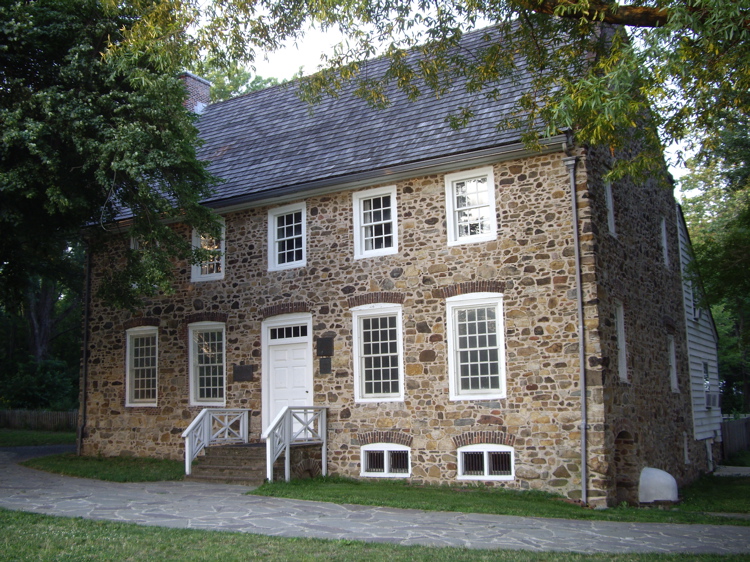
The conference was held on the south shore of Staten Island in a house owned by Colonel Christopher Billopp, a Loyalist. The Americans sent a delegation of three from Philadelphia: Edward Rutledge from South Carolina, the youngest signer of the Declaration of Independence; John Adams of Massachusetts; and elder statesman Benjamin Franklin

The meeting lasted less than three hours and accomplished nothing. Howe was shocked that the three Americans rejected out of hand the idea of rejoining the mother country. More to the point, he had no authority to negotiate. For Adams and Rutledge, the diplomatic show must have seemed a waste of time. When Howe told Adams he thought of him as a "gentleman of influence," Adams retorted that Howe could "consider me in what light you please... except as a British subject."

The Billopp house, today known as the Conference House, is open April through mid-December on Fridays, Saturdays, and Sundays. More information about visiting can be found at http://www.theconferencehouse.org.

(More information on Henry Hudson and the Battle Brooklyn can be found in our forthcoming book, Inside the Apple.)


Search This Blog

Blog Archive