GET UPDATES IN YOUR INBOX! Subscribe to our SPAM-free updates here:

GET UPDATES IN YOUR INBOX! Subscribe to our SPAM-free email here:

Delivered by FeedBurner

Friday, October 31, 2008

The Ticker Tape Parade

With so many anniversaries this week (the opening of the first subway; the Great Crash of 1929), it was easy to overlook that the city’s most famous statue—Frederic August Bartholdi’s Liberty Enlightening the World, aka the Statue of Libertyturned 122 years old on October 28.

The official grand opening in the harbor was followed by a parade up Broadway from Battery Park. It was during that parade that some enterprising office worker in one of the brokerage houses on Broadway decided to turn his company’s used ticker tape into confetti. Thus was born the ticker tape parade, an enduring New York tradition.

The parades took a while to catch on. The next one was for Admiral Dewey, hero of the Spanish-American War, following his return from Manila. Then ten years went by before the next parade, for Jack Binns, the radio operator of the RMS Republic. (The Republic had struck the SS Florida in January; because the ship was equipped with wireless radio, Binns was able to send a Mayday signal and the passengers and crew were rescued.)

In the 1920s ticker tape parades really started to take off. The parades, under the purview of the mayor’s office, were mostly given to arriving dignitaries, sports heroes, or pioneers in flight. The two busiest years were 1951 and 1962, which each had 9 parades. In 1962, honorees were as diverse as John Glenn, the New York Yankees, and Archbishop Makarios of Cyprus.

The Yankees hold the record for most parades at eight. While a handful of individuals have been feted twice (including Glenn), only one person has been honored three times—Admiral Richard E. Byrd, the polar aviator and explorer.

If you find yourself in Lower Manhattan, take a stroll up Broadway from Battery Park. All the recipients of ticker tape parades are commemorated in plaques in the sidewalk.

More about ticker tape parades—including what was at the time the biggest ever held for the Apollo astronauts in 1969—can be found in Inside the Apple, which is available for pre-order now.

[Photo by StormyDog on flickr.]

* * *

To get RSS feeds from this blog, point your reader to this link.
Or, to subscribe via email, follow this link.

Also, you can now follow us on Twitter.

Thursday, October 23, 2008

August Belmont's Private Subway Car

October 27 marks the 104th anniversary of the opening of New York’s first subway, the IRT. On that day, Mayor George “Max” McClellan took hold of the controls at the City Hall station and enjoyed it so much that he kept driving all the way to Broadway and 103rd Street, where the motorman was finally allowed to take over.*

(When the city celebrated the subway’s centennial in 2004, we thought it would have been great for Mayor Bloomberg to reenact McClellan’s joyride, but—alas—no such luck.)

The IRT (Interborough Rapid Transit Company) was created in 1900 to build and operate the first subway and its principal financier was August Belmont, better known today for building Belmont Park, the home of the Belmont Stakes. Part of the IRT’s first complement of rolling stock was a private car for Belmont, named the Mineola (after the family seat on Long Island).

As New York Times columnist Meyer Berger noted in Meyer Berger’s New York, the Mineola was decked out with

Philippine mahogany…, mulberry silk drapes, knee-deep carpeting, sliding leatherette curtains, a kitchenette with kerosene stove and old-fashioned icebox, special subway-pattern china and glassware, overstuffed reclining couch, swivel chair and roll-top desk.
Talk about commuting in style. While it is certain the Belmont used the car for entertaining and showing off the IRT to guests, stories have also persisted for years that the Mineola would whisk Belmont and his guests from a siding under the Belmont Hotel on 42nd Street all the way out to Belmont Park. In theory, this would have been possible (switching from IRT to LIRR tracks at Atlantic Avenue), but there is no evidence that the Mineola ever made that journey.

After Belmont’s death, the car was eventually sold for scrap. However, it never quite managed to end up on the junk heap and in 1973 was acquired by the Shoreline Trolley Museum in East Haven, Connecticut, where it remains to this day.

You can read more about Belmont and the building of the IRT in Inside the Apple.

* * *

Tuesday, October 21, 2008

Free Admission to the Andrew Carnegie Mansion

In celebration of National Design week, the Cooper-Hewitt National Design museum is free from October 19 to 25.

The museum is housed in the former mansion of steel magnate and philanthropist Andrew Carnegie. Built by Cook, Babb & Willard from 1899 to 1901, the home featured 64 rooms including vast public rooms, a conservatory, one of the first passenger elevators in a private home, and a very early version of central air conditioning.

Today, it is one of only two full-block mansions on Fifth Avenue left from the Gilded Age (the other is the former home of Carnegie's crony Henry Clay Frick). It is well worth a visit both for its architecture and to see the collections of its current tenant, the Cooper-Hewitt, which is the Smithsonian's National Design Museum.

Much more about Carnegie and his mansion can be found in Inside the Apple.

* * * *
Also in the news: a nice story in the October 20 issue of the New York Observer about the house on West 11th Street that was blown up by the Weather Underground, who have been in the news so much lately vis a vis Bill Ayers and Barack Obama.

* * *


Wednesday, October 15, 2008

The Panic of 1907

There was an excellent article in the New York Times about the closed-door meeting in Washington where Treasuty Secretary Henry Paulson dictated the terms of the government's $250 billion investment in 9 large U.S. banks. Seems that Paulson got them all in the room and told them they weren't leaving until they'd signed the one-page agreement he had drafted.

This brought to mind a famous story about the Panic of 1907--at the time one of the most severe economic panics the nation had ever seen. At that time it wasn't the government that Wall Street turned to for a bailout, it was J. Pierpont Morgan, whose famous "House of Morgan" stood opposite the New York Stock Exchange. (The building, still there, is now part of a condo development.)

When the Knickerbocker Trust Company failed in October 1907, Morgan was able to prop up the floundering stock exchange by getting banks to promise $25 million dollars to infuse the market with liquidity. However, a number of other small banks and trusts were on the verge of collapse and Morgan knew there'd be more market uncertainty without a stronger course of action. On the night of November 2, 1907, he invited the leaders of the city's big banks to his new library. Once there, Morgan locked them inside and wouldn't let them go until 5:00 a.m. the next morning having secured an additional $25 million in investment capital to bolster the failing trust companies.

Morgan, who died six years later, was one of America's largest collectors of rare books and fine art. The library--the original section of which was designed by noted Beaux-Arts architect Charles Follen McKim--is now the Morgan Library & Museum, one of New York's finest small museums.

More information about Morgan, his library, and the Panic of 1907 can be found in Inside the Apple. Pre-order you copy today!

* * *

Thursday, October 9, 2008

Christopher Columbus in New York City

Monday, October 14, marks the 74th year that Christopher Columbus' "discovery" of America has been celebrated as a national holiday. In New York City, celebrations date back to at least 1792, the 300th anniversary of Columbus' voyage, but didn't really start in earnest until the first waves of Italian immigrants began arriving in the years around the Civil War.

In 1892, the 400th anniversary, New York City went all out in its Columbus celebrations. Three separate statues were planned for Central Park and--since there was already one in the park, donated by a private individual--this would have meant a total of four Columbus monuments in the park alone. In the end, we only have two Columbus commemorations: one in the middle of Columbus Circle (donated by the Italian-American community) and one on the Mall, put up under the auspices of the New York Genealogical and Biographical Society (NYG&B).

Each is worth a visit. The Italian Columbus stands on a 70-foot pillar in the midst of the traffic circle where 59th Street intersects Broadway and Central Park West. It is sculpted of marble by Gaetano Russo and the base is inset with bas relief images of Columbus' first landing.

To reach the other Columbus, enter the park here and walk north on the West Drive (the ring road) to Tavern on the Green/Sheep Meadow. Turn right and walk east along the bottom of Sheep Meadow; when you get to the other side, follow the path as it curves to the left (don't re-cross the ring road) and you'll get to base of the park's formal promenade, known as the Mall. There you'll find the other Columbus. 

This work, often known as "the Spanish Columbus," is by Jeronimo Sunol, a Spanish artist who had already created a similar sculpture in Barcelona. The statue's champion was James Grant Wilson, a Civil War veteran, New York City historian, Central Park lover, and all-around civic-minded citizen. Through the NYG&B, Wilson raised the funds to place this statue in the park, probably as a counterbalance to the Italian piece in Columbus Circle. With so many Italians immigrating to the United States in the late 19th century, it is likely that the subtext of any so-called "Spanish Columbus" was that it was, in fact, a "non-Italian Columbus."

Meanwhile, the Spanish government was interested in commemorating the explorer with its own statue, but plans fell through and it was never built.

Lastly, there was the privately donated piece. It was sculpted by Emma Stebbins--best known for the park's Angel of the Waters--and ended up living for years in a tavern that once stood in the park near the 102nd Street transverse. Stebbins' Columbus later traveled down to Columbus Park in Chinatown and now stands in Cadman Plaza in front of the Brooklyn Supreme Court building. (To visit, take the 2, 3, 4, or 5 subway to Borough Hall. The Columbus Statue is directly in front of the main Supreme Court entrance.)

Much more about Columbus and his appearances in NYC history, art, and architecture can be found in Inside the Apple.

Happy Columbus Day!

* * *

Thursday, October 2, 2008

New York's Lost Ballparks

With the end of the season for both the New York Yankees and the Mets, both Yankee Stadium and Shea Stadium are coming down.

This is, of course, not the first time New York has lost classic stadiums. On tours of Harlem and Brooklyn Heights, baseball fans often ask us about the fate of Ebbets Field--home of the Brooklyn Dodgers--and the Polo Grounds, once home to the baseball's Giants and Yankees as well as football's Giants and Jets.

As the name suggest, the Polo Grounds were originally built for polo matches, though other sports were played there too. The original stadium was on 110th Street, just north of Central Park and it was the first home of the New York Gothams, who soon changed their name to the Giants. In the 1890s, the Giants moved to a new stadium on Coogan's Bluff at the terminus of the 9th Avenue Elevated Railroad and a year later into the stadium next door that had once belonged to the short-lived rival Players' League. Expanded after a fire in 1911, it was this stadium that remained the Polo Grounds until 1964.

The Polo Grounds was home to one of baseball's most famous games; on October 3, 1951, the Giants won the National League pennant with Bobby Thomson's "Shot Heard 'Round the World," a home run off the Brooklyn Dodgers' Ralph Branca, launching them into the World Series (which they subsequently lost to the Yankees).

The Yankees played at the Polo Grounds from 1913 to 1922 and it was home to the NFL Giants from 1925 to 1955. The New York Jets and the New York Mets were the stadium's last occupants. Both played there until Shea Stadium opened in 1964. The Polo Grounds were demolished that year and a public housing project built in there place. A sign hangs on the wall of one of the buildings in the housing project where home plate once stood.

Ebbets Field suffered as similar fate. The stadium was built in the Flatbush neighborhood in Brooklyn in 1913 to be home to the Brooklyn Dodgers, then owned by Charles Ebbets. It was here Jackie Robinson broke the color line when he joined the team in 1947.

However, in the 1950s the team's owner, Walter O'Malley, began putting intense pressure on the city to build the ball club a new, improved stadium. When New York balked at O'Malley's demands, the Dodgers followed through on what many had considered an empty threat and moved the team to Los Angeles in 1957. That same year, the Giants left the Polo Grounds for San Francisco, suddenly taking New York from being a city of three world-class baseball teams to a city with just the Yankees. Many in Brooklyn have never forgiven O'Malley--or the team--for their desertion.

In 1960, Ebbets Field was demolished and, like the Polo Grounds, was replaced by public housing. The housing project, originally called the Ebbets Field Houses, was renamed the Jackie Robinson Apartments in 1970s.

Wednesday, September 24, 2008

The New York Times Great Children's Read

On Sunday, October 5, the New York Times is once again hosting its "Great Children's Read" on the campus of Columbia University.

This all-day event features celebrities (well, mostly demi-celebrities) reading from a slew of great children's books set in New York City. A full schedule is available on their site, but one highlight will be the well-eyebrowed George Whipple reading oneof James's all time-favorite kids books: The House on East 88th Street.

Also appearing will be They Might Be Giants, whose most recent children's album is Here Come the 123s.


* * *

Monday, September 22, 2008

"Super City: New York" on the History Channel

On Monday, September 22, at 9:00pm (and repeated later in the week), the History Channel is showing a special called Super City: New York. It's been a little tough finding out information, but the blurb states (with some touch-and-go grammar) that the show:

"Peeling back layers of time shows Manhattan Island as it looked when it was discovered by Henry Hudson in 1609, then examines how people and nature have changed the landscape and speculates on the city's future."
We are intrigued.

UPDATE
Now that we've seen the show both in September and its recent December re-airing, we thought a little review was in order.

According to the show, to be a "Super City," a place must be "a marvel of engineering, infrastructure, and commerce." New York is certainly all those things, though the program gave pretty short shrift to the commercial aspects of the Big Apple.  (Perhaps they are saving that for the sequel.)

At two hours, the special seemed to drag a little--especially during the sections about skyscraper building, which didn't seem to offer anything new. But on the whole, this is an enjoyable foray into the city's natural history and its incredible infrastructure.

Some interesting tidbits we gleaned:

  • When most of the world's landmass was just one continent, dinosaurs walked from New Jersey to Africa, and the Jersey side of the Hudson is teeming with dinosaur footprints.

  • The palisades are the edge of a lake that formed when Africa ripped away from North America.

  • A beaver pond once stood in the area that is now Times Square. (This, and many other good facts, are courtesy of Eric Sanderson and the Mannahatta Project at the Wildlife Conservation Society.)

  • Rebuen Rose-Redwood, a geographer at Texas A&M and an expert on the 1811 survey that mapped Manhattan's grid, has found at least one original survey pin in Central Park. (We are going to search for the pin when the weather gets warmer and--if feasible--add it to one of our tours.)

    You can also read this article about Rose-Redwood and how his discovery of the pin was recreated for the TV cameras.

  • A 55-mile long pneumatic tube system that once delivered 200,000 pieces of mail per hour between the post office and downtown office buildings.

Many of these aspects of New York's history, including the city's geology, geography, and infrastracture, all appear in  our book, Inside the Apple, which is coming out in March. To pre-order a copy at Amazon, follow this link -- or go to our home page to find other online merchants.

* * *

Use this link to subscribe to RSS feeds from this blog. Or, to subscribe via email, follow this link.


* * *

Thursday, September 18, 2008

Whales in New York - Past and Present


As was heavily reported this week in the local news (see the Times, Post, and US News & World Report), the waters just outside New York harbor are teeming with whales.

Scientists, led by Dr. Christopher Clark, director of bioacoustics research at Cornell's ornithology lab, placed a series of underwater microphones in the waters surrounding New York, thinking that they would find evidence of a few migratory whales. Instead, they found hundreds, including right whales, humpbacks, blue whales, and minke whales.

In its earliest years, New York City was well known for its whale population. In March 1647, Adriaen van der Donck, New Amsterdam's resident lawyer (and the man whose farm gave rise to the city of Yonkers), reported that he'd seen several whales swim all the way up the Hudson River to Troy, New York (almost 160 miles from the harbor). There the poor creatures beached themselves. This made the Hudson "oily for three weeks" and produced a stench that could be smelled for miles.

In 1697, Trinity Church, Wall Street, received its official royal charter, which gave it title not only to a significant amount of land in Lower Manhattan, but also to the profit from any whales or shipwrecks along the banks of the Hudson. As the charter noted, the church was permitted to:

"seize upon and secure all Weifts Wrecks Drift Whales and whatsoever else Drives from the high sea and is then  lost below high water mark and not having a lawful Owner within bounds and limits of his Majesties Province of New York."

After securing the whales, the parish could then

"tow [them] ashore and then to cutt up the said Whales and try into Oyle and secure the Whalebone [to sell to raise cash for] the building of the Church aforesaid and to no other use whatsoever until the same be perfectly finished."

Anyone have any idea what a "weift" is?

You can read more about the building of the first Trinity Church and about Adriaen van der Donck in Inside the Apple.

Tuesday, September 16, 2008

The Subway That Never Reached Williamsburg


The Times FYI column posted a question we've always wanted to ask:

Q. Most subway stops’ names use only the street number (42nd Street, for example). How come West Fourth Street and a few stops in the Bronx (like East 180th Street and East 149th Street) are given an east/west distinction?

A. Mainly to avoid confusion.

Herb Schonhaut, manager in New York City Transit’s Office of Station Signage, said the Fourth Street station uses the word “West” to distinguish it from the planned but unbuilt “South” Fourth Street Station in Williamsburg, Brooklyn.

Now, that's the kind of answer that raises more questions--such as, what South Fourth Street Station?

Luckily, the folks over at the Waterfront Preservation Alliance of Greenpoint and Williamsburg have all the answers in an excellent blog post today, which details the IND Second System that was to have opened in the 1930s.

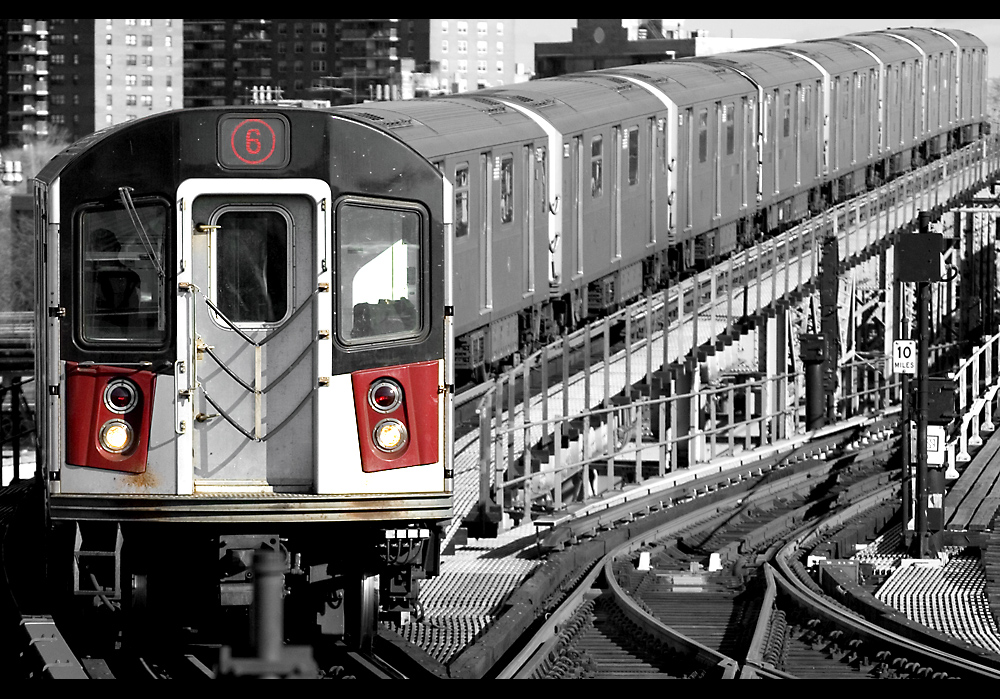
The first New York City subway, the IRT (Interborough Rapid Transit) opened in 1904 with a line that ran from City Hall to 42nd Street (today's No. 6 train), across 42nd Street to Times Square (now the Shuttle), and up the West Side along Broadway (now the No. 1 train). More on the subway and its impact in the shaping the city can be found, as always, in Inside the Apple, due out in early March 2009.

Search This Blog

Blog Archive