GET UPDATES IN YOUR INBOX! Subscribe to our SPAM-free updates here:

GET UPDATES IN YOUR INBOX! Subscribe to our SPAM-free email here:

Delivered by FeedBurner

Showing posts with label patents. Show all posts

Thursday, November 29, 2018

Postcard Thursday: Edison's Phonograph and "I Want to Hold Your Hand"

File:PhonographPatentEdison1880.jpg

On November 29, 1877 -- one hundred and forty-one years ago today -- Thomas Edison first demonstrated the device that he would patent seven months later as the phonograph.

Edison's first crude phonograph used tin foil and doubled as both the recording and playback instrument.

At the demonstration, Edison spoke Sarah Josepha Hale's poem "Mary Had a Little Lamb" into a crude microphone. Flipping the phonograph into playback mode, Edison immediately played back the words he'd just recorded to the assembled audience.

And just like that, the future of entertainment was irrevocably changed.


Realizing that tin wasn't the right medium, Edison soon switched to wax cylinders (as shown in the photo of the inventor, above). Wax cylinders were then replaced by round discs and the modern record player was born.

It's a fun coincidence that November 29 is also the anniversary of the Beatles single "I Want to Hold Your Hand," the song that came out in 1963 and catapulted the group into super-stardom. The single was released in the US in December, launching Beatlemania -- and again changing popular entertainment forever.
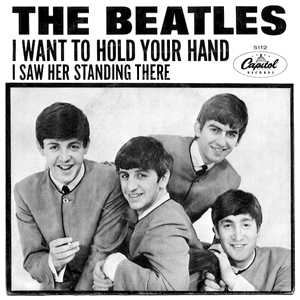
03 iwantoholdyourhand.jpg

* * *

Happy Holidays! If you are looking for a great gifts this holiday season, Inside the Apple and Footprints in New York look great on anyone's shelves!


Friday, August 11, 2017

Postcard Thursday: Hedy Lamarr and the Invention of Wi-Fi


An actual postcard for "Postcard Thursday"! (OK, so it's Friday, but one step at a time.)

The home above belonged to the woman in the inset, actor Hedy Lamarr, star of such films as Ziegfeld Girl, Tortilla Flat, and Samson and Delilah, the highest-grossing film of 1949.

But on August 11, 1942 -- 75 years ago today -- Lamarr's most lasting contribution to the world happened with little fanfare: she was awarded a patent for a frequency-hopping spread spectrum communication system. The system, which she invented with composer George Antheil, was not the first to use random sequences to create a covert communications system, but the method patented by Lamarr and Antheil was later adopted by the US Navy and became the basis for both Wi-Fi and Bluetooth technologies.


There's a brief article at CultureLab that's worth reading in full about Lamarr's contributions to science, but here's a brief excerpt:
The invention was not her first. Lamarr previously experimented with cola-flavoured bouillon cubes for homemade soft drinks. But her new idea, which officials would only say was "related to remote control of apparatus employed in warfare", would become a signal innovation of the century, the technology now underlying cellphones and Wi-Fi. Expertly explaining the genesis and consequences of Lamarr's invention, in Hedy's Folly, Richard Rhodes transforms a surprising historical anecdote into a fascinating story about the unpredictable development of novel technologies. 
When Lamarr turned her attention to national defence, following the tragic sinking of a ship full of refugees by a German U-boat in 1940, she knew far more about armaments than most movie stars. Before arriving in Hollywood, she had been married to the Austrian munitions manufacturer Fritz Mandl, who supplied the Axis powers. Dining with Nazi generals, Lamarr not only learned about the latest submarines and missiles but also the problems with them: notably the challenge of guiding a torpedo by radio, and shielding the signal from enemy interference. 
Her insight was that you could protect wireless communication from jamming by varying the frequency at which radio signals were transmitted: if the channel was switched unpredictably, the enemy wouldn't know which bands to block. But her ingenious "frequency-hopping" idea was just a hunch until Lamarr met fellow amateur inventor George Antheil at a Hollywood dinner.

Notorious in the music world for avant-garde compositions featuring airplane propellers and synchronised player pianos, prior to the war, Antheil had galvanised Paris, and incited riots, with his cacophonous Ballet Mécanique. He had also attempted to invent an open-top pianola with which to teach basic keyboard technique. It flopped, but this background came in handy. To realise Lamarr's idea, Antheil proposed coordinating transmitter and receiver by controlling the switching between channels with two identical piano rolls running at the same speed.
Lamarr died in 2000, but not before being recognized in 1997 with the Electronic Frontier Foundation Pioneer Award for her contributions to modern technology. In 2014, she was posthumously inducted into the National Inventors Hall of Fame.

↘↗↘
Read more about NYC history in


Search This Blog

Blog Archive